


Search the site

How to Succeed at Senior or Executive Level Interviews.

First impressions in senior level or executive interviews are rarely about what you say first, but more about how you arrive.
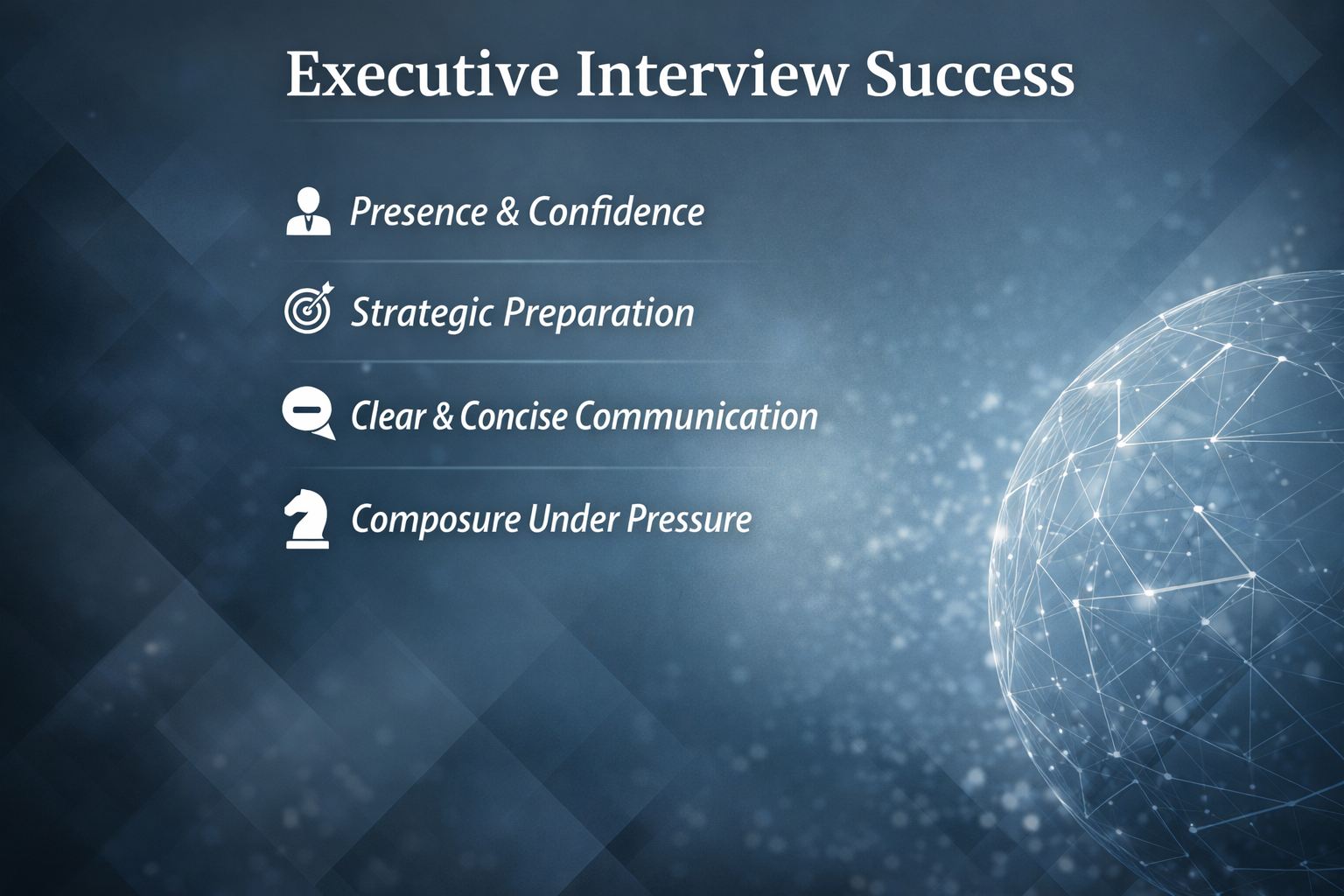
Presence and confidence set the tone before a single question is asked.
At senior levels, hiring decisions are influenced as much by how you carry yourself as by your experience.
Confidence, when grounded and authentic, builds trust quickly.
Showing up with presence means being fully engaged in the moment.
It’s reflected in your posture, your eye contact, your pace of speech and your ability to listen without interruption.
It communicates that you are composed, deliberate and capable of operating under pressure.
The energy you bring into an interview should be intentional - calibrated to reflect both the pace of the organisation and the seniority of the role.
When your energy is measured, engaged and aligned to the moment, it reinforces your presence and signals that you can read the room and lead within it.
Confidence complements this by demonstrating that you understand your value and can articulate it clearly, without arrogance.
Together, they create credibility - the currency of executive hiring.
Preparation is the foundation of confidence.
Deeply understand the organisation’s strategy, challenges and market position.
Go beyond surface-level research - consider what keeps the board awake at night and where you can add measurable impact.
When you can connect your experience directly to their priorities, your confidence becomes evidence-based rather than performative.
Clarity is equally important.
Executive interviews are not the place for long, unfocused answers - be concise and structured in your responses.
Use specific examples that demonstrate outcomes, not just responsibilities.
Hiring panels are looking for leaders who can think clearly and communicate decisively.
Another critical element is composure under pressure.
Senior interviews often include challenging or ambiguous questions.
Rather than rushing to respond, take a moment to think.
A measured pause shows control and strategic thinking - qualities expected at executive level.
Equally, ask thoughtful questions.
This is your opportunity to demonstrate commercial acumen and genuine interest.
Questions around organisational direction, culture and success metrics signal that you are already thinking like a leader within the business.
Finally, authenticity matters.
Confidence should never feel rehearsed or forced.
The most compelling candidates are those who are self-aware, honest about their journey and clear about the value they bring.
Executive interviews are not just assessments - they are leadership conversations.
When you show up with presence and confidence, you position yourself not as a candidate, but as a peer.
Morton Philips – 08 8210 8510 – operations@mortonphilips.com.au
Are you ready to take your next step?
Get in Touch

.svg)


